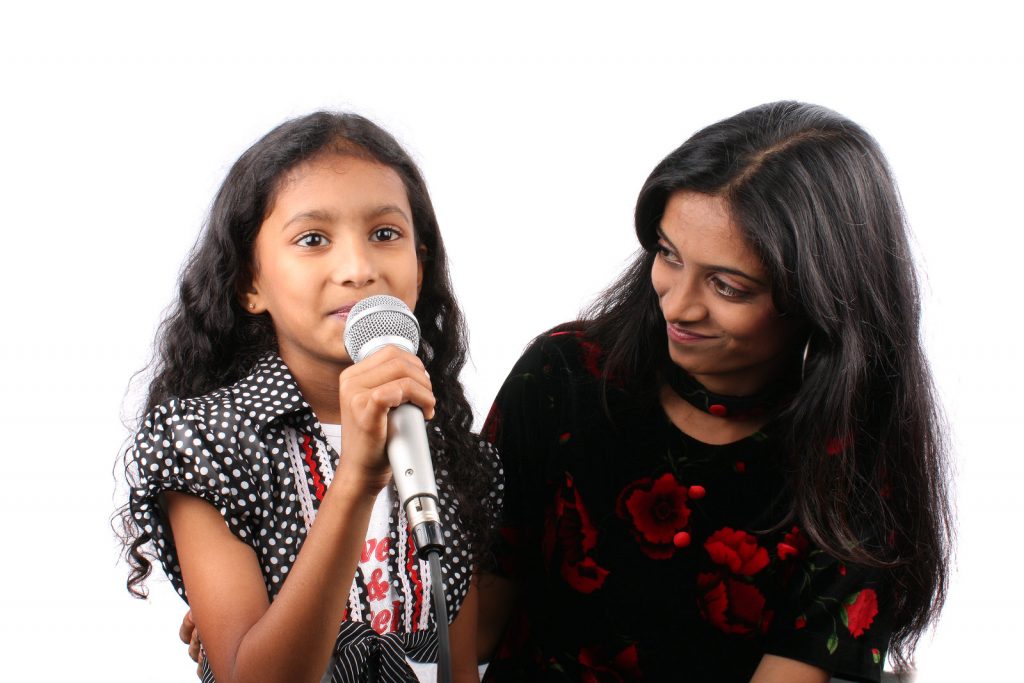
Learning a new language can be a fantastic adventure for kids, opening doors to new cultures and boosting cognitive skills. One popular approach to language learning is the Pimsleur Method, known for its audio-based, immersive style. So, what makes this method effective for children? Let’s dive into how the Pimsleur Method works and why it might be a great fit for your young linguist.
What is the Pimsleur Method?
The Pimsleur Method was developed by Dr. Paul Pimsleur in the 1960s. It focuses on teaching languages through auditory learning, emphasizing listening and speaking rather than reading and writing. The idea is to mimic the way we naturally acquire our first language — by hearing and repeating.
Key Features of the Pimsleur Method
Audio-Centric Learning: Each lesson is presented entirely in audio format, with native speakers providing pronunciation and contextual examples. This can be particularly engaging for kids, who often enjoy listening and mimicking sounds.
Graduated Interval Recall: This technique involves repeating words and phrases at gradually increasing intervals. It helps reinforce memory retention, ensuring that what kids learn sticks with them long-term.
Core Vocabulary Focus: Instead of overwhelming learners with too many words, the Pimsleur Method focuses on teaching a manageable set of high-frequency vocabulary. This allows children to start forming sentences quickly.
30-Minute Lessons: The lessons are designed to be short and manageable, fitting well into busy schedules and aligning with kids’ shorter attention spans.
Why is the Pimsleur Method Effective for Kids?
Natural Learning Process: Kids are naturally good at picking up sounds and patterns from their environment. The Pimsleur Method taps into this ability by focusing on listening and speaking, making language acquisition feel like a natural process.
Engagement Through Listening: Many children are auditory learners, meaning they grasp new concepts better through listening. The audio-only format of Pimsleur can be more engaging than traditional book-based methods.
Flexible Learning: Whether it’s in the car, during playtime, or as a bedtime routine, the flexibility of audio lessons means kids can learn at their own pace and in their preferred environment.
Confidence Boosting: By focusing on speaking from the get-go, kids quickly gain confidence in their ability to communicate in a new language. This immediate application of knowledge can be incredibly motivating.
Is It Right for Your Child?
While the Pimsleur Method has many advantages, it’s important to consider your child’s learning style. If your child is more visual or enjoys interactive activities, you might want to supplement Pimsleur with other resources that include visual aids or interactive components.
In conclusion, the Pimsleur Method offers a unique and effective way for kids to learn languages through listening and speaking. Its focus on natural learning processes and practical vocabulary can make it an ideal choice for young language learners who thrive on auditory input. Give it a try and see if it sparks your child’s interest in embracing a new language!
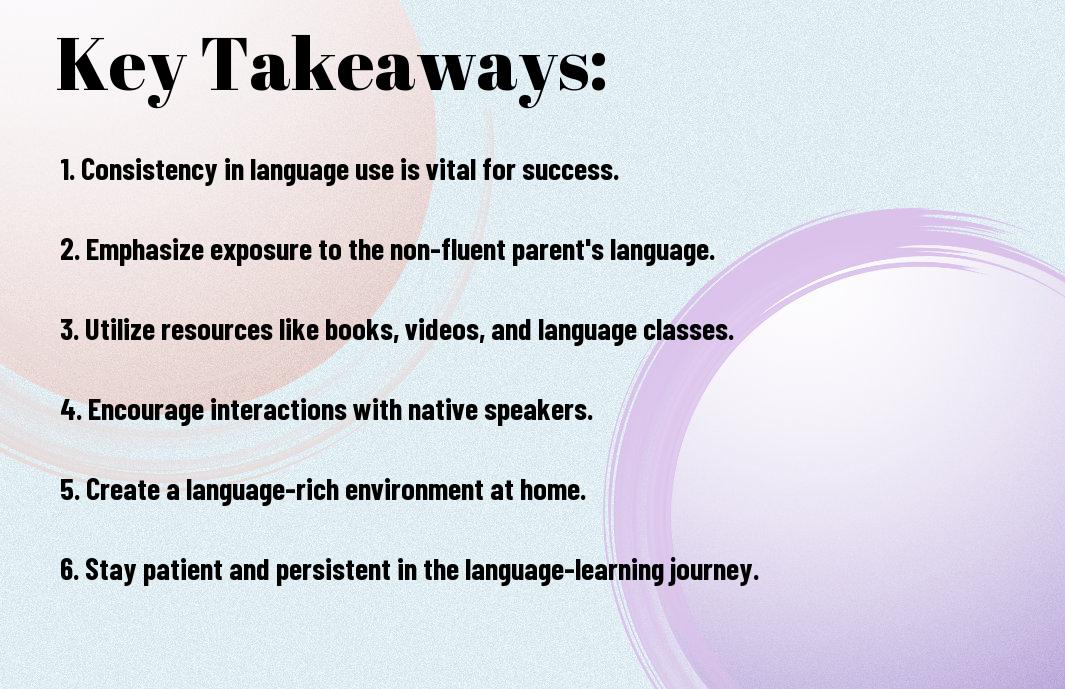
You may be wondering how to effectively implement the One Parent, One Language strategy when the parent isn’t fluent in the target language. It’s a common concern for many parents raising bilingual children. However, with the right approach and dedication, it’s still possible to successfully use this method and help your child become bilingual. In this blog post, we will explore some tips and strategies to make One Parent, One Language work even when the parent is not fluent in the second language.
Understanding One Parent, One Language
The Origins and Principles
One Parent, One Language (OPOL) is a popular strategy used in multilingual families to ensure children become proficient in each parent’s language. With this approach, each parent consistently speaks only their native language to the child, creating a clear language distinction and promoting language development.
OPOL origins
Origins of the OPOL approach can be traced back to the 1980s when researchers began studying language input and the impact of bilingualism in children. The main principle behind OPOL is that consistent exposure to two languages from an early age allows children to develop fluency in both languages, resulting in numerous cognitive and social benefits.
For instance, one of the main benefits of OPOL is that it can lead to bilingualism, which has been linked to improved cognitive skills, such as better problem-solving abilities and increased creativity. However, challenges may arise if one parent is not fluent in their designated language, as this could limit the child’s exposure and fluency in that language.
Techniques for Non-Fluent Parents
Utilizing Technology and Resources
The use of technology can be a game-changer for non-fluent parents trying to introduce a second language to their child. There are a variety of language learning apps, online resources, and educational videos designed specifically for children. Any non-fluent parent can take advantage of these tools to help their child learn and practice the language in a fun and interactive way.
Creating a Language Immersion Environment
One effective way to immerse your child in a second language is by creating an environment where the language is consistently present. This can include labeling items around the house in the target language, playing music or watching shows in the language, and seeking out language immersion programs or playgroups in the community. For instance, setting aside specific times each day to speak only in the target language with your child can help reinforce their language skills and create a more immersive learning experience.
Strategies for Consistency and Motivation
Setting Realistic Expectations
Expectations must be set realistically when implementing the one parent, one language approach without the parent being fluent. It is crucial to acknowledge that the non-fluent parent may make mistakes or struggle with the language at times. Accepting this reality can help alleviate pressure and create a more comfortable learning environment for the child.
Encouraging Engagement and Persistence
Expectations for engagement and persistence should be reinforced to ensure consistent language exposure. Parents can encourage their children to use the non-fluent language through interactive activities, such as reading books, watching movies, or playing games in that language. Consistent practice is key to developing fluency over time.
Engagement with the language can be fostered through incorporating it into daily routines and creating opportunities for the child to use it in meaningful ways. Parents can also provide positive reinforcement and praise when their child makes an effort to communicate in the non-fluent language, boosting confidence and motivation.
Navigating Cultural and Linguistic Barriers
Addressing Societal Pressures
All too often, parents face societal pressures when it comes to raising their children with a one parent, one language approach. These pressures can stem from the community, extended family members, or even well-meaning friends who may question or criticize the non-fluent parent’s ability to effectively communicate in the target language. It is important for parents to remain steadfast in their decision and focus on the long-term benefits of bilingualism for their child.
Embracing Multicultural Identity
Pressures to conform to a single cultural identity can sometimes make it challenging for children growing up in a multicultural household. Embracing multicultural identity is imperative in helping children develop a strong sense of self and belonging. Parents can expose their children to various cultural traditions, holidays, and languages to create a rich and diverse environment that celebrates their unique heritage.
By actively participating in cultural events, learning about the history and traditions of each parent’s culture, and encouraging open discussions about identity, parents can help their children navigate the complexities of multiculturalism with confidence and pride.
Looking Ahead: Fostering Lifelong Bilingualism
Lifelong bilingualism is a gift that keeps on giving. By instilling a passion for languages early on, you can set the stage for your child to become fluent in both languages and even pursue additional languages in the future. Exposing them to diverse cultural experiences and encouraging language learning beyond the family setting can further support their bilingual journey.
For instance, enrolling your child in language classes, arranging playdates with other bilingual children, or traveling to countries where the target language is spoken can all contribute to their language development and open up a world of opportunities for them.
While our language learning process was created specifically for small children in mind, it works for all ages. What makes it unique for kids is that it’s picture based, not text-based. Therefore, it is not a prerequisite for your child to know how to read and write in English before they can learn the language of your/their choice.
In addition, some language programs focus on confirming pronunciation by speaking into a tool. Children’s verbal skills are still developing and their pronunciation may not be accurately picked up on those programs. Instead, we focus on learning how to enunciate through different people saying the phrase and at different speeds. I found that different accents would make it difficult to understand how to say it, so I often seeing how to write it in order to properly say it. With small children, this concept doesn’t work. So instead, I’ve created a way to have the word respoken by different people with different tones and a different speed of the word so that you can truly understand how to say it phonetically as well as how to say it naturally. Take English for example, if we want to say, “I’m gonna have lunch at noon”, the proper way would be “I’m going to lunch at 12pm”, but we more often hear it said “I’m gonna have lunch at noon”. It’s challenging to teach this, but it’s also challenging to hear it said this way and fully understand that “gonna” is a more casual way of saying “going to”. We do our best to take these nuances into consideration since they are the natural way of speaking a casual language and it will be easier to understand native speakers and how to speak more natively.
How to encourage language learning for kids
It can be difficult to hold a child’s attention. Memorizing vocabulary can easily get boring and when kids lose interest, they often don’t learn well. We’ve created a system that builds on what you learn so that it encourages children to want to get to the next step. When they’ve learned a new “theme” around kitchen for example, they will be rewarded with a video on what they’ve learned, with the reward being knowing what is being said. The accomplishment is the reward. As we further along their rewards, they will begin to learn new songs with their vocabulary, and they will graduate to more complex videos and songs.
The picture theory of language, coined by Ludwig Wittgenstein, referred to the representational theory of languages in a non-verbal form. Spoken languages are not able to fully express the full meaning the way that a picture can. The picture theory of meaning states that statements are most meaningful when they can be defined through a visual representation.
Who is Ludwig Wittgenstein?
Ludwig Wittgenstein was an Austrian philosopher who didn’t really enjoy philosophy. He spent much of his life trying to shut it down. Wittgenstein shared his ideas about language, logic, metaphysics, ethics, and how we should generally live in the world. His most notable books include the Tractatus Logico Philosophicus (1921) and the Philosophical Investigations (1953). Wittgenstein is most famous for his ideas on the picture theory of language, which basically contradicts the entire idea of philosophy itself. He was influenced by Boltzmann Hertz Schopenhauer, Frege, Russell, Kraus, Loos Weininger Spengler, and Sraffa.
How does the picture theory apply to language learning?
The picture theory refers to language getting in the way of fully describing what we see and how we understand. Though learning a new language, translations would also be a barrier to fully understanding the meaning of the first language. Therefore, ideas get lost in translation. In addition, there are literal translations and there are more meaningful, natural language ways of saying something.
Take Google Translate for example. If we use this to translate one language to the next, you’ll see the mechanics of the language doesn’t always translate to the full meaning.
In addition, there are certain words in languages where there simply are no equivalent word in a different language for translation. Take the word “love” in Vietnamese. Yêu usually refers to passionate love, the term typically used between partners or spouses. Thương refers to an innocent, familial love, typically used between a parent and child. In Greek, there are 8 words that refer to love: Mania: obsessive love, Storge: familial love, Philautia: love of self, Pragma: long-standing love, Agape: love for everyone, Ludus: playful love, Philia: deep friendship, and Eros: Sexual passion.
To overcome the obstacle of “translations” being inaccurate, using pictures allows us to better describe our intent. Examples of language learning software that bases its teaching style on this is Rosetta Stone.
What are some of Wittgenstein’s famous quotes?
‘If people never did anything stupid, nothing intelligent would ever get done’.
‘I don’t know why we are here, but I’m pretty sure that it is not in order to enjoy ourselves’.
A picture held us captive. And we could not get outside it, for it lay in our language and language seemed to repeat it to us inexorably
‘If a lion could talk, we should not be able to understand him’,
Wittgenstein argued, because the language games of lions are too different from our own to permit understanding. It is worth noting, as an aside, that Wittgenstein’s theory does allow that lions have a language, based in the social dynamics of their hunting and mating activities. The roaring of two adult male lions, challenging each other for leadership of the pride, is arguably as much of a language gaming activity as the banter of two human rivals, each attempting to outdo the other through a play of words. We are a long way from the formalistic view of language described in the Tractatus. We have left the Platonic realm of pure logic and rediscovered the world.
To summarize, although all of his ideas up for interpretation, I believe Wittgenstein devalued language and felt it got in the way. In quora, one answer really resonated with me. It shared insight into misunderstanding when arguing over issues that likely did not have a resolution and that Wittgenstein might deduce to ‘Are we even talking about the same thing?’
If you struggle to overcome the urge to define things too carefully, or find yourself becoming obsessed about the meaning of words and their ‘true’ definition, or if you are convinced, like many philosophers, that the existence of a word logically implies some metaphysical essence, or Platonic form, that corresponds to this word, remember that what gives a word meaning is the conventional social discourse within which it is employed. By attending to the ordinary language contexts that give words their meaning, we can avoid misusing them and trying to make them mean things that they aren’t made to mean. The more that we return words to their home, seeing them in terms of the ordinary language contexts that they work within, the easier it becomes to untie the knots in language and understand what is really being said.
The long held assumption about learning a second language is that grammar is more important than vocabulary. Second language instruction has traditionally focused on teaching adult language learners grammatical knowledge: sentence construction, verb conjugations, singular and plural forms, noun-adjective agreements, verb tenses, etc. Linguistic research, however, has demonstrated that vocabulary is more fundamental than grammar (Lewis, 2002; Nation, 2001; Barcroft, 2004; Wilkins, 1972). Meaning is primarily conveyed through vocabulary. British linguist David Wilkins (1972) puts it this way: “While without grammar little can be conveyed, without vocabulary nothing can be conveyed” (p. 111).
It starts with learning your first word
Sometimes, just knowing a single word in a language can make all the difference. In his book Vocabulary Myths, Keith Folse (2004) tells a story about not knowing the right word. Having just moved to a rural town in Japan to teach English, Folse wanted to buy some flour. He’d learned the Japanese sentence pattern “Sumimasen, ____ -wa doko desu ka?” or “Excuse me, where is the ____?” and confidently set out on his mission to the local supermarket. Yet, even with this basic grammar, he was lacking the necessary knowledge: he did not know the word for flour.
After wandering the store unable to locate any identifiable bags of flour, he spied one of his students outside. He ran outside and called out, “How do you say flour in Japanese?” Unfortunately his student replied “Hana” – the word for flower, instead of komugi-the word for flour. After being presented with chrysanthemums in the produce section, Folse left the store without purchasing flour.
He reflects: “What I needed in that situation was one word: komugi. In this experience, I learned that vocabulary is actually more important than grammar” (pp. 19-22).
Declarative and Procedural Learning
Neuroscientists have found that the human brain has two memory systems: declarative and procedural. These two systems reside in different parts of the brain.
The declarative memory system for language learning
The declarative system learns facts: words, phrases, history dates, capital cities, telephone numbers, etc. The procedural system learns skills (Ullman, 2005; 2006). The classic example of a procedurally learned skill is riding a bicycle. Acquiring declarative knowledge generally requires conscious effort and repeated exposure. Procedural skills, on the other hand, tend to be learned through doing or practicing.
For language learning, the brain relies on both memory systems. Vocabulary – in the form of individual words, longer phrases, and even short sentences – is learned and stored in the brain through the declarative memory system. Grammar rules can also be learned as facts.
The procedural memory system for language learning
The procedural memory system, on the other hand, internalizes the skills of applying grammar rules without thinking about them (Ullman, 2005; 2006). We can think of language as consisting of declarative knowledge and procedural skills.
The larger your declarative reservoir, the better.
Sufficient, repeated, and meaningful exposure to a language creates a “declarative reservoir”. Words, phrases, short sentences, and other small chunks of language are “declarative items” stored in our declarative memory. Declarative items are short enough to hold in your memory. The sum of all the declarative items you know in a language is your declarative reservoir.
A large declarative reservoir is an advantage when you are trying to communicate. Just like purchasing flour in Japan, if you don’t know a certain word in a language, you will be unable to produce it when needed or understand it when you hear it. The more declarative items you have at your ready disposal, the more easily you will learn new items and function in that language.
Beyond knowing the right words, a large declarative reservoir also enables fluency. Research has found that language consists of frequently re-occurring “chunks” – stock phrases, idioms, and common expressions – and that, in addition to individual words, we all store a large number of these chunks in our declarative memory (Lee, 2004; Nation, 2001; Sinclair, 1991). These chunks are the building blocks of language, allowing us to reduce the processing time needed to produce fluent speech or writing.
Rather than constantly referring to grammatical rules to express every idea anew, people tend to draw on pre-constructed chunks, stringing them together into longer sequences according to what chunks tend to go with what chunks (McCarthy, 1998; Nation, 2001; Pawley & Syder, 1983; Sinclair, 2004).
The nuances of translating a different language
The tendency to rely on chunks explains the puzzle of why only a small portion of grammatically correct expressions sound “native-like” (Pawley & Syder, 1983; Nation, 2001). Both “Please pass the salt” and “I request that you hand me the salt shaker” are grammatically correct, but only the first expression sounds native-like because “please pass the __” is a high-frequency chunk.
One study of adult second language learners, before and after language immersion, found that memorization of these longer, frequently occurring sequences of words explained their increased fluency (Towell et al, 1996).
Less obviously, but just as important, for adult second language learners, research shows that initially acquiring a declarative reservoir complements and facilitates grammar instruction, saving time and effort (Nation, 2004, p. 336). The saving of time and effort occurs because the larger our declarative reservoir, the more grammatical patterns and exceptions to grammatical patterns we can readily recall.
In other words, a large declarative reservoir is absolutely crucial for effective language learning and fluent communication.
Why memorizing a large set of words works
Based on all this research, the best starting strategy for any language learner would be to quickly memorize a large number of frequently-used words, stock phrases, and common expressions. That’s exactly what flashcards enable you to do. Flashcards are designed to help you quickly build a declarative reservoir in the language you are learning – with perfect recall.
BIBLIOGRAPHY
Barcroft, Joe. (2004). Second Language Vocabulary Acquisition: A Lexical Input Processing Approach, Foreign Language Annals, 37 (2), 200-208.
Folse, Keith S. (2004). Vocabulary Myths: Applying Second Language Research to Classroom Teaching. Ann Arbor, MI: The University of Michigan Press.
Lee, Namhee. (2004). The Neurology of Procedural Memory. In John H. Schumann, Sheila E. Crowell, Nancy E. Jones, and Namhee Lee (Eds.), Neurology of Learning: Perspectives from Second Language Acquisition (pp. 43-74). Lawrence Erlbaum.
Lewis, Michael. (2002). The Lexical Approach: The State of ELT and a Way Forward. Boston: Heinle.
McCarthy, Michael. (1998). Spoken Language and Applied Linguistics. Cambridge University Press.
Nation, I. S. P. (2001). Learning Vocabulary in Another Language. Cambridge, UK: Cambridge University Press.
Pawley, A. & Syder, F. (1983). Two Puzzles for linguistic theory: nativelike selection and nativelike fluency. In J. Richards and R. Schmidt (Eds.), Language and Communication. Longman.
Sinclair, John. (2004). Trust the Text: Language, corpus and discourse. Routledge.
Towell, R., Hawkins, R., and Bazergui, N. (1996). The development of fluency in advanced learners of French, Applied Linguistics, 17, 210-233.
Ullman, Michael T. (2005). A Cognitive Neuroscience Perspective on Second Language Acquisition: The Declarative/Procedural Model. In C. Sanz (Ed.), Mind and Context in Adult Second Language Acquisition: Methods, Theory, and Practice (pp. 141-178). Washington, DC: Georgetown University Press.
Ullman, Michael T. (2006). Language and the brain. In J. Connor-Linton and R. W. Fasold (Eds.), An Introduction to Language and Linguistics (pp. 235-274). Cambridge, UK: Cambridge University Press.
Wilkins, David A. (1972). Linguistics in Language Teaching. Cambridge, MA: MIT Press.
The Spaced Repetition System (SRS) is a learning technique that is used to help remember information for long-term retention. It works by spacing out the intervals between review sessions gradually increasing the time between each review. This allows the learner to gradually commit the information to their long-term memory. SRS has been shown to be an effective way to improve memory and recall. It has also been used in a variety of settings including education business and medicine.
Leitner system for language learning
The Leitner system is a learning style often performed by using flashcards. Newer harder flashcards are displayed more frequently while older and less difficult flashcards are displayed less often. This takes advantage of the mental spacing effect. Use of spaced repetition is proven to increase the learning rate.
The Leitner system is a widely used method of effectively using flashcards developed by German science journalist Sebastian Leitner in the 1970s. This is a simple implementation of the spaced repetition principle where cards are reviewed at increasing intervals.
In this method flashcards are grouped according to how well the learner knows about each card in the Leitner study box. Learners try to recall solutions written on flashcards. If they are successful they will send the card to the next group. If they fail they send it back to the first group. Each subsequent group was given a longer period of time before asking learners to revisit the cards.
In the original method published by Leitner in his book So lernt man Lernen (How to learn to learn) the repeated schedule is determined by the size of the partitions in the learning box. These 1 2 5 8 and 14 cm respectively. Only when the partition is full can the learner review some of the cards it contains. The learner can then move them forward or backward depending on whether they remember them.
Why the Leitner System Works Well for Language Learning
The Leitner system provides brain stimulation that cannot be achieved simply by passively reading new or complex information. By actively answering questions and recalling information we have researched the Lightner system helps us access information stored deep in our memory over a longer period of time.
When our brains take in a lot of information at the same time the speed at which we forget information varies with each concept. Often our brains cannot process all the information at once which makes us more likely to forget most concepts. The focus of the Leitner system Spaced repetition and active recall of information allow our brains to absorb information and process it more efficiently.
For some, changing a familiar approach to learning may seem like a daunting task. But the Leitner system retains the familiar core principles of learning flashcards while incorporating new elements that increase efficiency. Whether you are learning a new language for fluency or as a hobby, the Leitner system can help you achieve your language learning goals.
Language development is an important part of your child’s growth. It helps them to communicate their needs understand the world around them and express their thoughts and feelings. There are many ways you can support your child’s language development. For example, you can read together, sing songs or just talk about everyday experiences. You can also encourage your child to use gestures and body language to communicate. Creating a language-rich environment at home will help your child to develop strong language skills.
What is language immersion
Language immersion is a technique used to teach a second language in which the learner is exposed to the target language for a significant amount of time. One way this can be done is through total immersion in an environment. This is where only the target language is spoken or by using instructional materials that are entirely in the target language. The goal of language immersion is to allow the learner to become proficient in the target language by using it in a natural way, as opposed to learning it through translation or rote memorization.
How does dual language immersion work
In language immersion students learn a second language by being taught academic content through the medium of that second language. Language immersion is different from traditional foreign language instruction in which the second language is taught as a subject itself. In an immersion program, students typically spend half of their day learning in the target language and the other half of the day learning in their native language. Over time as students become more proficient in the target language the amount of time spent learning in that language can increase.
Why consider language immersion for my child
There are many reasons to consider language immersion for your child. The obvious reason is that It can help them to become more proficient in another language. In addition, studies have shown that it can also have a positive effect on their development in other areas such as mathematics and music. Additionally, it can give them a competitive edge when they enter the workforce. Language learning can also be a fun and enriching experience for the whole family.
Do language immersion programs work
Language immersion programs are designed to help participants learn a foreign language by immersing them in an environment where that language is spoken. The idea is that by being surrounded by the language participants will have more opportunities to hear and practice it. Thus, they learn it more quickly and effectively. While there is no definitive answer as to whether or not these programs are effective. Many experts believe that they can be helpful in promoting language learning.
What age to start language immersion
There is no definitive answer as each child is different and will progress at their own pace. However most experts agree that earlier is better as young children are more receptive to new languages. If you’re considering immersion for your child, the best thing to do is talk to their teachers and see what they think. Many schools offer immersion programs, and the teachers will have a good sense of whether your child is ready.
One of the many ways to learn a new language is to memorize phrases as well as have a full grasp of the meaning behind the words. There are language learning apps that allow you to have flashcard-like tools to memorize words. This is a good starting point for any language learning, but it shouldn’t be the only tool you use if you want your child to have a permanent memory of the language they are learning.
When you learn a new language, your brain is processing it and it gets saved into your short term memory. As you begin to repeat the phrase and continue to use the phrase, you will improve how you use it, and you will memorize other words that often go along with it. This creates sentences by analogy, based on the phrases and sentences you’ve heard, stored and potentially memorized indirectly. This is often called comprehensible input. There are several methods that focus on giving students compelling comprehensible input, such as ALG, TPR, TPRS and story listening.
Trying to memorize a new language helps your memory
When you try to learn something new, you are building a skill in itself: memorization. This could have a long term impact on your ability to memorize other things, skills and studies have shown that learning new things at any age could aid in deferring illnesses such as alzheimers disease.
Pre-learning before your child enters an immersion school
Before your child begins attending an immersion school there are a few things you can do to help them prepare. Pre-learning is essential for your child before they enter an immersion school. It is recommended that you start teaching them the basics of the language before they start their schooling, including memorizing some common phrases. This will help them to be more prepared for the challenges that they will face during their schooling. Additionally it is important to make sure that your child is exposed to as much of the language as possible. This can be done by reading books watching movies and listening to music in the target language.
Reinforcing a new language at home
One of the best ways to reinforce a new language at home is to create a language-rich environment. This can be done by labeling objects around the house in the new language reading books together in the new language and watching movies or TV shows in the new language. It is also important to provide opportunities for conversation by talking about daily routines telling stories and discussing current events. By providing plenty of exposure to the new language and encouraging communication in it families can create a supportive environment for learning. Even if you are not fluent in the language your child is learning, take the time to learn and memorize them together, and use the new language as often as possible in everyday life.
Memorization is a process of encoding and storing information in memory. It is a building block for future success because it helps children learn new information and retrieve previously learned information. When children are able to retrieve information from memory they can apply it to new situations which helps them learn and problem-solve more effectively.
Children can benefit from playtime. Games offer a fun-filled, relaxed environment where they can practise using new words and are free to express themselves. Participating in recreational activities is an effective way to develop language learning skills. Games offer your son or daughter a fun and carefree environment where they can discover and practice using new linguistic phrases and be free to express themselves. Participating in recreational pursuits can help to build your youngster’s communication skills and might change the way they socialize with others.
Examples games and playtime activities
Here are some example games you can play with your kids that infuse language learning with fun:
Word games.
Encourage your children to learn new words through word games. They can point at objects of interest at home as well as during road trips, such as I am ascribing the flour to the basin now or a building is a high-rise. You may also give definitions or share information relating the origins of these words. Games like Scrabble, Pictionary, or a round of Charades also encourage vocabulary development and communication skills.
Jokes.
Saying age-appropriate puns is one way to stimulate good humor and imagination in kids. When this is encouraged, word play and overall imagination also increase. Read age-appropriate joke books and take turns telling witty stories. Avoid getting too critical of the kids’ gags, speech, or articulation. Instead, model proper pronunciation or grammar by repeating the statement back to them correctly.
Riddles.
Riddles are fun ways to use words and create vivid depictions of events or situations. Engage in interactive speech concerning riddles, teach your child to give multiple definitions of a single word. e.g. school as a place for studying or a school as a group of fish to help them understand the riddle more deeply.
Rhymes.
The repetitive chant, narration, writing, or hearing of rhymes helps improve auditory memory, speech, and listening skills, while also encouraging speech. You can also record your daily routine using rhyming words, and let your children describe the things they like with rhyming words.
Homonyms.
Teach your kids to realize identical-sounding words that mean completely different things. Letting them come up with the more unique curated versions. This may function as an excellent marker of how well they have penetrated their vocabulary.
Storytelling.
Create stories for them to tell about their day-to-day lives. Expand the scope of their imagination with fantastical stories and help their creativity develop as you compose stories about everything around them.
Songs.
There are songs that are entertaining as well as helpful for instructing kids new words. The rhythmic rhymes of songs can assist kids learn to follow along and have fun. You may also sing a song while playing a game with your child that will be played and enjoyed by all.
Tongue twisters.
Children enjoy tongue twisters, which are a great way to teach proper pronunciation and enunciation of words. It is a great way to exercise their tongues to understand words. Try simple ones and work your way up to more complex ones.
Integrate learning into everyday activities
Words can be made up into stories, musicals, and a lot of other different approaches to help your children become more articulate. Push on your young children to talk well by constructing a healthy and fun environment in which they can unleash their creativity and expand their linguistic abilities. Guide them on how to express their thoughts, feelings and actions better through the use of words as this will prepare them to face the world with confidence as they grow.
It can be challenging for small children to have the attention span to formally learn a new language. One technique that may be worth exploring is to try to learn a new language through play. With your help, children can learn new and valuable skills through play activities and general social interaction.
Every child has a different way of learning
If your child is interested in what he/she is doing, they will be more engaged in that activity. Because of this, take note of and follow their lead. Pay attention to where their interest in an activity occurs and position activities that are designed to engage them. The more engaged your child is in an activity, the more likely they will take to a second language.
Learn a new language through singing
Singing music is an enjoyable and healthy way to enhance linguistic, listening and physical abilities. Singing can also help a young child learn to communicate concepts. You can incorporate language-learning exercises with singing things like the normal children’s songs for their age or by using a tune in the daily actions you and your child are doing.
– Your child can memorize a song in a new language.
Whether it be a new melody native to the new language or a melody they already know and enjoy, it can be fun to sing and dance to a new song
When your child learns a new song, dissect the song and learn the meaning behind it. Whether you want to learn just the main words or the history of the song, keep your child curious and thirty for learning new things
– Share the song with others.
Once your child has learned their new songs, have them show off their new learning ability to friends and family. They may even want to teach the new song to someone else.
Keep the first song they learn simple and short, so that they can quickly learn it. Once they’ve enjoyed their new ability, they will be encouraged to learn more difficult and longer songs in the new language.
Read a book in a different language
Reading helps open the world to learning and improve your communication skills, language and memory.
By exposing your kids to a variety of books, you can find out which appeal to them more and guide you in acquiring books that hold their interest. You can begin with simple books, perhaps books containing short text and images. Progress toward more difficult activities as your children’s reading skills improve.
Flashcards
One of the best ways to familiarize you child with a new language is by utilizing real-world objects that will keep their attention. Unfortunately, life isn’t always consistent or conducive to this activity, which is why adding flashcards as a learning tool is crucial.
In introducing each flashcard, it is important to present your child with the picture together with the right pronunciation for the sound. Once your son or daughter has created the association between the picture and voice, showing written text for the word will be the next step to take. The brain forms a connection between the image, pronunciation, and word. This connection is stored in long-term memory.
Rather than going through each flashcard one-by-one, reinforce the new word in other areas. For example, if you’re singing a song in English, you may want to swap that “animal” flashcard word with the newly translated word, or better yet, make a song out of the new words altogether and repeat, repeat, repeat.
Pausing to engage interaction
Try building a turn-taking routine to help give your child a opportunity to ponder and respond. You can also try fun activities where everyone has equal downtime between turns. It’s important to be patient, as all children have different ways of processing information. Turn-taking is an important skill that plays a key role in social development, so it’s good to pass it to your kids from an early age. This will mainly improve the way they correlate and express themselves as part of their personality.
Rinse and Repeat
Children need opportunities to learn various skills. It might seem like tedious or unproductive to parents to replay the exact same activity, but for children, taking part in the exact same activity repeatedly will let them build abilities and refine proficiency. It is crucial to encourage repeating actions, words, and preferences, especially those they engage with. Repeatedly singing the same songs, for example, is also beneficial for memorizing new information, teaching new skills, and structuring speech.
As long as your child is happy and engaged, learning a new language will be fun and a long-term project for the whole family.
 Sometimes, just knowing a single word in a language can make all the difference. In his book Vocabulary Myths, Keith Folse (2004) tells a story about not knowing the right word. Having just moved to a rural town in Japan to teach English, Folse wanted to buy some flour. He’d learned the Japanese sentence pattern “Sumimasen, ____ -wa doko desu ka?” or “Excuse me, where is the ____?” and confidently set out on his mission to the local supermarket. Yet, even with this basic grammar, he was lacking the necessary knowledge: he did not know the word for flour.